Choosing Fast Charging Lithium Batteries is not simply a race for the highest charging speed. A battery that reaches 80% quickly may still suffer from heat, capacity loss, or poor performance in cold conditions. Dr. Jeff Dahn, a respected lithium-ion battery researcher, has said, “The battery is the single most important component in an electric vehicle.” His observation also applies to power stations, electric tools, mobility devices, and other modern equipment.
This guide presents seven practical tips for comparing Fast Charging Lithium Batteries. It examines battery chemistry, charging rate, thermal management, battery management systems, cycle life, safety certifications, and warranty support. A clear specification sheet should show charging time, usable capacity, operating temperature, and expected degradation. Look beyond impressive laboratory figures. A battery charging beside a sunny window may behave differently from one operating in a cool workshop. Small details matter.
The perfect battery does not exist. Faster charging can increase heat and reduce longevity when protection systems are weak. Buyers may also trust marketing language too quickly. That is a mistake worth admitting. Consider independent test results, manufacturer documentation, and realistic daily usage before deciding. A reliable choice should balance speed, safety, durability, and total cost. These tips will help readers ask better questions and avoid purchasing a battery that looks powerful but performs poorly after repeated charging.
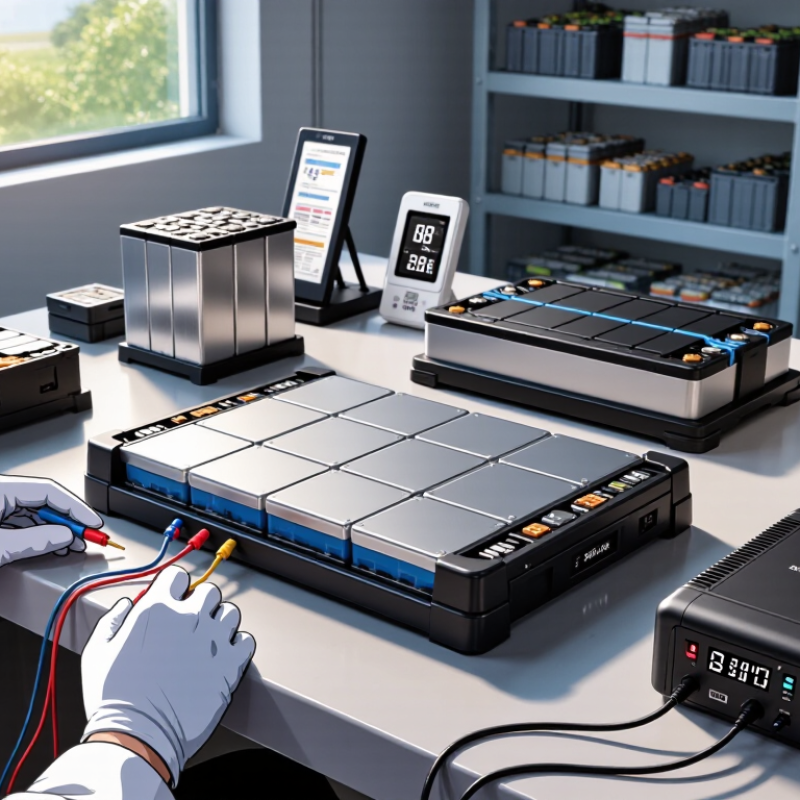
Fast charging begins with a clear power target, not a charger label. Define the battery’s required charging time, operating voltage, capacity, and maximum current. A 100 Ah battery charged in two hours needs roughly 50 A, before efficiency losses. Check both continuous and peak power requirements. They are not the same.
Measure the real workload. A delivery vehicle climbing hills may need stronger discharge performance than its charging speed suggests. A backup system may value long cycle life over rapid charging. Review the battery’s recommended C-rate, allowable temperature range, and charge curve. Heat matters. In practical testing, charging at high current can raise cell temperature quickly, especially in enclosed spaces. The battery management system should monitor voltage, temperature, and cell balance during every charge.
Match the battery with a compatible charger and protection system. Confirm voltage limits, connector ratings, communication protocols, and cooling requirements. Do not assume a higher current always saves time; the final charging phase often slows near full capacity. Leave a safety margin of about 10 to 20 percent when sizing cables and power supplies, depending on the application and verified engineering guidance. This is an area where rough estimates can mislead. Actual results change with battery age, ambient temperature, and load history. Record charging time, temperature, and capacity during repeated tests. Small details reveal performance problems early.
Choosing a fast-charging lithium battery starts with its chemistry. Lithium iron phosphate cells usually offer strong thermal stability and long cycle life. Nickel-based cells can provide higher energy density, but they require tighter heat control. The IEA Global EV Outlook 2024 reports that electric-vehicle battery demand exceeded 750 GWh in 2023. That growth makes chemistry comparisons more important, not less. Check the manufacturer’s cycle-life data, not only the advertised capacity.
Match the battery’s charging profile with the charger’s voltage and current. A higher current does not always mean faster charging. It may increase heat, aging, or safety risks. The U.S. Department of Energy notes that DC fast charging times vary widely by vehicle, battery size, temperature, and charger output. Treat “80% in 30 minutes” as a test condition, not a promise. Calculate the charging C-rate. Then confirm whether the battery management system supports it. This is where many buyers, including experienced ones, become careless.
Inspect thermal sensors, overcurrent protection, and cell-balancing functions. Verify connector polarity and communication compatibility before installation. Charging below freezing can damage some lithium cells, while high temperatures can accelerate degradation. IEC 62133-2 testing requirements address portable lithium battery safety, but certification alone does not guarantee correct system integration. Choose a battery with documented test results, clear operating limits, and a service history. I would also leave a safety margin below the maximum charging rate. Fast is useful, but fast and poorly matched is an expensive mistake.
Fast charging begins with capacity, but capacity alone can mislead. Measure usable watt-hours, not only amp-hours. A 20 Ah battery at 48 V stores about 960 Wh before conversion losses. That figure is more useful than “20 Ah” alone. Voltage must match the equipment and charger. A higher-voltage battery can reduce current and heat, but only with compatible electronics. The U.S. Department of Energy’s Vehicle Technologies Office identifies thermal control and battery management as key factors in charging performance. Numbers deceive.
Cycle life deserves careful reading. Manufacturers usually define one cycle as 100% cumulative discharge, not one calendar day. Many lithium battery tests report capacity retention near 80% after hundreds or thousands of cycles, but temperature, charging speed, and discharge depth change the result. The International Energy Agency’s Global EV Outlook 2024 highlights rapid growth in high-power charging infrastructure, making thermal limits increasingly important. A battery promising 3,000 cycles may achieve less in a hot workshop with daily fast charging.
Expected runtime should be calculated from load, efficiency, and reserve capacity. Divide usable watt-hours by average watts, then allow roughly 10–20% for inverter and wiring losses. A 960 Wh pack powering a 120 W device may provide about 6.5–7 hours, not eight. Real loads fluctuate. Motors surge. Cold weather reduces available energy. I sometimes overestimate runtime when testing ideal conditions, so recording actual discharge time is wiser than trusting the label. Check the datasheet’s test temperature, cutoff voltage, charging current, and retention standard before comparing two batteries.
Tip 1: Inspect the thermal design, not only the charging speed. Look for cooling plates, heat sensors, and uniform contact between cells.
Tip 2: Ask for charging curves at high and low temperatures. A battery rated for 10 minutes may slow sharply near 45°C.
Tip 3: Check whether the battery management system limits current when cells heat unevenly. Small temperature differences matter.
Tip 4: Confirm protection against overcharge, over-discharge, short circuits, and excessive current.
Tip 5: Look for cell balancing data, because weak cells can become hotter during repeated fast charging. Real testing is better than a polished datasheet.
The International Energy Agency reported that global electric-car battery demand exceeded 750 GWh in 2023, increasing by about 40%. This growth makes thermal control more important, especially in compact packs with limited airflow.
Tip 6: Verify applicable certifications and test records. IEC 62133-2, UL 2580, and UN 38.3 address different safety or transport requirements; one certificate does not cover everything.
Tip 7: Request independent test results, including cycle life after frequent fast charging. A battery can pass a short laboratory test and still age quickly in daily use.
I would also examine the warranty exclusions. They are easy to overlook.
Perfect specifications do not exist.
7 Tips for Choosing Fast Charging Lithium Batteries
Choose a supplier with documented field experience, not only attractive specifications. The International Energy Agency reported that global EV battery demand reached about 750 GWh in 2023. This growth increases pressure on quality control. Ask for cell traceability, production audits, safety test reports, and thermal performance data. A reliable supplier should explain charging limits clearly. Vague promises deserve caution.
Read the warranty before signing. Check coverage length, cycle limits, capacity retention, operating temperatures, and exclusions. A five-year warranty may sound strong, but its conditions can be narrow. Confirm whether labor, transportation, diagnostics, and replacement batteries are included. Ask how claims are handled and request realistic response times. Keep every promise in writing.
Maintenance support matters after installation. The supplier should provide charging procedures, inspection intervals, fault codes, and storage guidance. Request remote troubleshooting and access to trained technicians. IEA data shows battery demand is expanding rapidly, yet service quality can vary widely across regions. That gap is easy to underestimate. In practice, a battery may fail because of poor settings, loose connections, or heat exposure. A supplier that reviews operating records can prevent repeat failures. Ideally, request service examples from similar applications. One uncomfortable question remains: who supports the battery after the sales team disappears?
| Tip | Selection Dimension | Practical Data or Benchmark | What to Confirm with the Supplier | Warning Signs |
|---|---|---|---|---|
| 1 | Verify the Required Charging Rate | Compare the battery’s specified continuous charging current with the charger output. A 100 Ah battery charged at 0.5C requires approximately 50 A; charging at 1C requires approximately 100 A. | Request the permitted charging C-rate, maximum charging current, recommended charger profile, and expected charging time under normal conditions. | The supplier advertises “fast charging” without stating the charging current, temperature limits, or battery capacity used for the claim. |
| 2 | Check Cell Chemistry and Thermal Safety | Lithium iron phosphate (LiFePO4) cells generally offer strong thermal stability and long cycle life. Other lithium-ion chemistries can provide higher energy density but may require stricter thermal management. | Ask for the chemistry, cell specifications, operating-temperature range, thermal monitoring method, and evidence of protection against overcharge, over-discharge, and short circuit. | No cell-level or pack-level safety information is provided, or the supplier cannot explain how heat is detected and controlled during rapid charging. |
| 3 | Evaluate the Battery Management System | A suitable BMS should monitor cell voltage, pack current, temperature, state of charge, and balancing status. Fast charging increases the importance of accurate current and temperature protection. | Confirm the BMS continuous and peak current ratings, low- and high-temperature charge cutoffs, cell balancing method, communication interface, and fault-recording capability. | The BMS rating is lower than the charger output, protection thresholds are undisclosed, or the supplier cannot provide fault codes or operating instructions. |
| 4 | Confirm Capacity and Cycle-Life Test Conditions | Usable energy depends on discharge limits, temperature, load, and age. Cycle-life figures should state test conditions such as charge rate, discharge rate, depth of discharge, temperature, and end-of-life capacity threshold. | Request rated capacity, usable capacity, test standard or procedure, end-of-life definition, and a capacity-retention figure at a clearly stated cycle count. | A high cycle count is presented without depth of discharge, temperature, charging rate, or remaining-capacity information. |
| 5 | Review Safety and Transport Documentation | Lithium batteries are commonly subject to transport and product-safety requirements. Depending on the application and destination, relevant documentation may include UN 38.3 test evidence, safety data, and applicable electrical or battery standards. | Ask for current test reports, declarations of conformity where applicable, installation instructions, shipping classification, and documentation matching the exact battery model. | Documents refer to a different model, contain incomplete test details, or are described as “certified” without report numbers or scope. |
| 6 | Compare Warranty Terms and Service Response | Battery warranties vary by application and market; a written warranty commonly defines a time period, capacity-retention requirement, cycle or energy-throughput limit, and exclusions. | Confirm warranty duration, guaranteed capacity threshold, eligible operating conditions, claim documents, replacement or repair process, labor and shipping coverage, and response-time targets. | Only a verbal warranty is offered, normal wear is undefined, capacity degradation is excluded entirely, or the supplier provides no formal claim procedure. |
| 7 | Assess Maintenance, Monitoring, and Spare-Part Support | Lithium batteries usually require less routine maintenance than lead-acid batteries, but periodic inspection of connections, cables, enclosure condition, error logs, and state-of-charge data remains important. | Confirm remote monitoring options, firmware-update procedures, diagnostic access, service intervals, replacement parts, technician training, and end-of-life recycling guidance. | No repair channel, diagnostic software, spare-parts plan, installation support, or recycling procedure is available after delivery. |
| Buyer Checklist: Select a battery only after matching its charging current, charger profile, BMS limits, operating temperature, safety documentation, warranty conditions, and long-term service capability to the intended application. | ||||
Lithium iron phosphate cells usually provide strong thermal stability and long cycle life. Nickel-based cells may store more energy. However, they need stricter heat control. Check cycle-life data, not capacity alone.
No. A higher current can increase heat and battery aging. Match the charger’s voltage and current with the battery’s charging profile. Treat advertised charging times as test conditions, not guarantees.
Confirm voltage, current, connector polarity, and communication compatibility. Check whether the battery management system supports the intended charging rate. A small wiring mistake can cause expensive damage.
Cold charging can damage some lithium cells. High temperatures accelerate degradation. Ask for charging curves at low and high temperatures. A battery rated for ten minutes may slow sharply near 45°C.
Look for overcharge, over-discharge, short-circuit, and overcurrent protection. Thermal sensors should monitor uneven heating. Cell balancing also matters. Weak cells can become hotter during repeated fast charging.
No certificate proves complete system compatibility. Different tests cover different safety or transport requirements. Request test records, operating limits, and independent results. Perfect specifications do not exist.
Check coverage length, cycle limits, capacity retention, temperature limits, and exclusions. Confirm whether labor, transport, diagnostics, and replacement batteries are included. A five-year warranty may have narrow conditions.
Request cell traceability, production audits, fault codes, inspection intervals, and storage guidance. Ask for trained technical support and realistic response times. Keep every promise in writing. I might overlook support until something fails.
Ask for charging procedures, inspection schedules, operating records, and troubleshooting instructions. Review loose connections, heat exposure, and incorrect settings regularly. Fast charging is useful. Poor matching is costly.
Choosing Fast Charging Lithium Batteries requires more than selecting the quickest charging option. Start by defining your power needs, operating conditions, charging time goals, and expected performance. Then confirm that the battery chemistry, charger, and equipment are fully compatible and designed to work safely together. Compare key specifications such as capacity, voltage, cycle life, discharge performance, and expected runtime to ensure the battery can support your application reliably.
Thermal management and built-in protection are also essential for controlling heat, overcharging, over-discharging, and short-circuit risks. Check whether the battery meets relevant safety certifications and quality requirements. Finally, choose a supplier with a dependable production record, clear technical documentation, responsive support, and a practical warranty policy. Reliable maintenance guidance and after-sales service can help maximize battery life, reduce downtime, and ensure consistent performance throughout long-term use.

Lithmate