What Is the Best China Lithium Battery for Forklifts?

Time:2026-10-10 Author:Charlotte
0%

Choosing the best Lithium Battery For Forklifts is not a simple matter of comparing price per kilowatt-hour. Warehouse managers also examine charging speed, cycle life, thermal control, warranty terms, and service support. A battery may look inexpensive on a spreadsheet. It may perform poorly beside a cold loading dock or during three-shift operation.

Industry data shows why this decision matters. The International Energy Agency reported that global battery demand for electric vehicles exceeded 750 GWh in 2023, increasing by about 40% from 2022. China represented a major share of this manufacturing and deployment activity. However, forklift batteries face different demands from passenger vehicles. They must deliver repeated high-current output, frequent opportunity charging, and dependable operation in dusty industrial environments.

Real performance depends on the whole system. Battery chemistry, battery-management software, charger compatibility, and forklift weight all influence results. So does the operator’s routine. A lithium battery charged during a ten-minute break may support a different workflow than one charged overnight. IEC 62619 and relevant industrial-truck standards provide useful safety references, while the U.S. Occupational Safety and Health Administration highlights controlled battery-charging practices for powered industrial trucks.

No single Chinese supplier is automatically the best. That conclusion would be too easy. Buyers should verify independent test evidence, cell traceability, protection ratings, cycle-life conditions, and local after-sales capability. The strongest choice balances measurable safety with practical uptime. It should also match the warehouse, not merely the brochure.
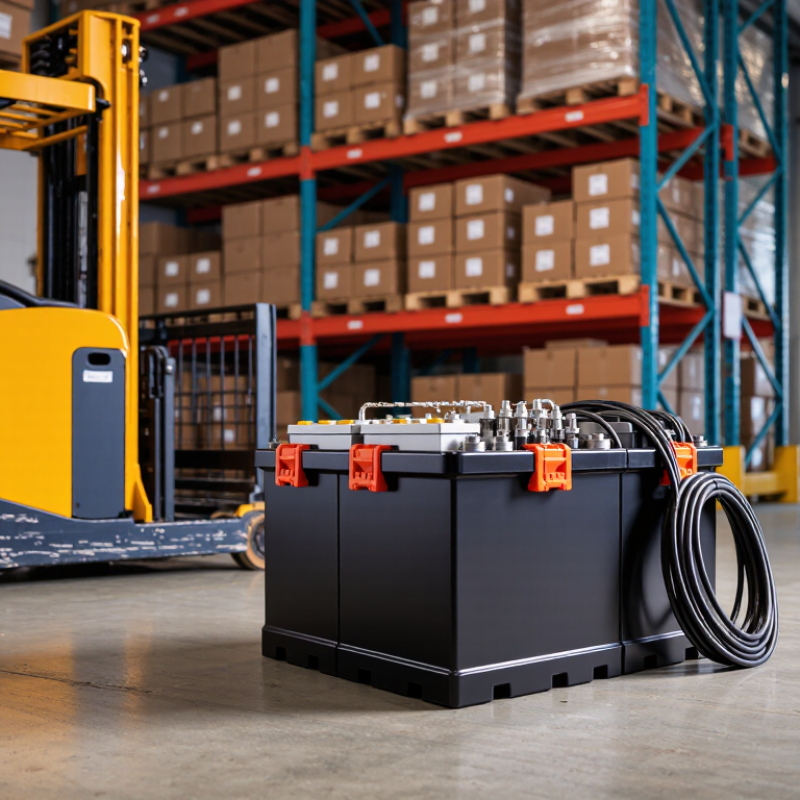
What Is the Best China Lithium Battery for Forklifts?

What Makes a Lithium Battery Suitable for Forklifts?

A suitable lithium battery for a forklift must match the truck’s voltage, connector, and operating limits. A wrong voltage can damage components or stop the vehicle during a busy shift. Lithium iron phosphate chemistry is often preferred because it offers stable performance and strong thermal resistance. However, chemistry alone does not prove quality.

In real warehouse use, capacity matters as much as advertised energy. A battery should support the forklift through planned shifts without deep, repeated discharge. Its battery management system should monitor cell voltage, temperature, current, and charging status. Clear warnings help operators respond before a small fault becomes downtime. Fast charging can improve productivity, but only when the charger and battery communicate correctly. Charging should occur in a controlled area with suitable ventilation and protective procedures.

Check cycle-life data under realistic conditions. Ask whether testing used heavy loads, frequent acceleration, and warm warehouse temperatures. Those details can change the result. The enclosure should resist dust, moisture, vibration, and impacts from daily handling. Service support also matters, including diagnostics, replacement parts, training, and a written warranty. I would not choose a battery only because it is cheaper or lighter. That decision often ignores installation quality and long-term maintenance. No battery is perfect. Even a well-designed unit may lose capacity in cold storage or under careless charging. Reviewing operating records after several months gives a more honest picture than relying on a sales sheet.

Key Lithium Battery Chemistries Used in Chinese Forklift Batteries

What Is the Best China Lithium Battery for Forklifts?

Key Lithium Battery Chemistries Used in Chinese Forklift Batteries

The best battery depends on duty cycles, charging access, temperature, and truck weight. Chinese forklift batteries commonly use lithium iron phosphate, nickel manganese cobalt, or lithium titanate chemistry. Each choice changes safety, runtime, charging speed, and cost.

Lithium iron phosphate, or LFP, is the practical mainstream option. It offers strong thermal stability, long cycle life, and predictable performance during warehouse operations. The International Energy Agency reported that LFP represented about 40% of the global electric vehicle battery market in 2023. Its share was even higher in China. A forklift moving pallets for two shifts can benefit from its stable discharge and simpler thermal demands.

Nickel manganese cobalt, known as NMC, provides higher energy density. This can reduce battery weight when a compact counterweight is important. However, it usually requires stricter thermal management and careful charging controls. Lithium titanate, or LTO, supports very fast charging and strong low-temperature performance. It suits intensive applications with short charging windows, though its higher cost can weaken the business case.

Real warehouse experience complicates the choice. Cold storage, uneven floors, and frequent acceleration can change the result. Battery pack prices also need context. BloombergNEF reported an average lithium-ion pack price of 115 dollars per kilowatt-hour in 2024, but forklift systems can cost more after integration and protection equipment. I would not select chemistry from price alone. A measured trial, including charging time, heat, and remaining capacity, is still necessary.

What Is the Best China Lithium Battery for Forklifts?

Lithium iron phosphate (LFP) is commonly preferred for forklifts because it offers a strong balance of safety, service life, cost, and thermal stability. Nickel manganese cobalt (NMC) provides higher energy density but generally has a shorter cycle-life range. Lithium titanate (LTO) supports very fast charging and extremely long cycle life, but its lower energy density and higher cost make it more specialized.

The chart shows representative industry ranges for full equivalent cycles at approximately 80% depth of discharge. Actual results vary with charging method, temperature, load profile, battery management, and maintenance.

How to Evaluate Chinese Forklift Battery Manufacturers

Choosing the best China lithium battery for forklifts begins with evaluating the manufacturer, not the sales brochure. Ask how long the factory has produced industrial batteries. Request production records, quality-control procedures, and customer references from similar warehouse operations. A reliable supplier should explain cell selection, battery management systems, thermal protection, and charging limits in clear language. Vague answers are warning signs.

Inspect traceability closely. Each battery should have identifiable cells, tested modules, and recorded final inspection results. Ask for cycle-life data under a load profile similar to your forklifts. A laboratory result may not match cold storage, steep ramps, or frequent opportunity charging. Request test methods, not just impressive numbers. Check applicable transport and product documents, such as UN 38.3 reports and market-specific conformity records. These documents support trust, but they do not replace an independent technical review. That is an easy mistake to make.

Tips: Visit the facility if possible. Watch how workers assemble busbars and seal enclosures. Ask to see failed units and corrective-action records; honest factories keep them. Confirm spare-part availability, remote diagnostics, warranty response times, and technician training. A small pilot order can reveal charging behavior, connector quality, and actual runtime. Do not judge only by price. I would also reassess the promised cycle life after several months, because early estimates can be too optimistic.

Safety, Performance, and Certification Requirements

What Is the Best China Lithium Battery for Forklifts?

Safety, Performance, and Certification Requirements

The best lithium battery is not simply the one with the highest capacity. It must match the forklift, charger, working hours, and warehouse conditions. A reliable battery should include a monitored battery management system, temperature sensors, cell balancing, and protection against overcharge and deep discharge. These features matter during long shifts, especially in narrow aisles with limited ventilation.

Safety comes first. Look for documented testing under relevant standards, such as UN 38.3 for transport and IEC 62619 for industrial lithium batteries. Some markets may also require regional approvals, including CE, UKCA, or UL-related certification. Confirm the certificate holder, battery model, test scope, and validity. A general company certificate is not enough. Ask for traceable test reports.

Performance claims need careful checking. Cycle life should state charging conditions, depth of discharge, temperature, and remaining capacity. A battery rated for 4,000 cycles may perform differently in a cold warehouse. Charging speed also depends on the charger, cable, ventilation, and daily schedule. In warehouse assessments, loose connectors and poor charging habits often create more risk than battery chemistry itself. That is easy to overlook. I would also inspect the enclosure, emergency disconnect, ingress protection, and service records before purchase. No specification sheet replaces an actual site trial.

How to Select the Best China Lithium Battery for Your Forklift

Selecting the best China lithium battery for a forklift starts with the machine, not the battery catalogue. Check the forklift’s voltage, current demand, compartment size, and connector type. A battery with the wrong dimensions can delay installation. Measure the tray carefully, including cable clearance and lifting access.

Match capacity to daily workload. A 48V battery rated at 560Ah may suit long warehouse shifts, but it can be excessive for light use. Review operating hours, load weight, travel distance, and charging opportunities. Lithium batteries usually support opportunity charging, yet frequent short charges still require suitable battery management software. Ask for verified cycle data, thermal protection details, and cell-level monitoring. Do not rely only on a printed specification sheet.

Supplier evaluation needs practical evidence. Request test reports, warranty conditions, service response times, and spare-part availability. Confirm whether technicians can diagnose fault codes remotely. Inspect the charger’s communication compatibility before ordering. This detail is often missed. Battery safety depends on installation, charging, and maintenance procedures as much as cell quality. Use documented training and clear inspection records. Check applicable transport and workplace requirements for your region. A lower purchase price can become expensive after downtime. Still, the highest capacity is not automatically the best choice. Recheck real energy consumption after several weeks, because initial estimates are sometimes wrong.

What Is the Best China Lithium Battery for Forklifts? - How to Select the Best China Lithium Battery for Your Forklift
Selection Dimension Recommended Benchmark or Typical Range Why It Matters What to Verify Before Purchase
Battery Chemistry Lithium iron phosphate (LiFePO4 or LFP) LFP batteries offer good thermal stability, a long service life, and a lower risk of thermal runaway than many other lithium-ion chemistries. Confirm the chemistry, cell quality, safety testing, and battery-management-system settings.
Nominal Voltage 24 V, 36 V, 48 V, 72 V, or 80 V, matched to the forklift The voltage must match the forklift traction system, motor controller, contactors, and onboard electrical equipment. Check the forklift nameplate, service manual, connector configuration, and required operating voltage.
Usable Capacity Typically 100–1,000 Ah, depending on forklift size and duty cycle Capacity determines how long the forklift can operate between charges. Required capacity depends on load, operating hours, travel distance, attachments, and ambient temperature. Calculate daily energy demand instead of selecting capacity only by battery dimensions or ampere-hours.
Energy Capacity Approximate energy = nominal voltage × rated ampere-hours Energy capacity makes it easier to compare batteries with different voltage and ampere-hour ratings. Ask for both rated energy and usable energy, because the BMS may reserve part of the battery to protect cell life.
Continuous Discharge Current High enough to support the forklift's rated traction and hydraulic loads; commonly specified in relation to the battery capacity Insufficient discharge capability can cause voltage sag, reduced lifting performance, overheating, or protective shutdowns. Compare continuous and peak current ratings with the forklift controller and hydraulic motor requirements.
Peak Discharge Capability Should support short acceleration, lifting, and ramp-load peaks without triggering protection Forklifts often require brief high-current output during acceleration, climbing, and lifting heavy loads. Confirm the peak-current duration and cutoff limits rather than relying on a single maximum-current figure.
Cycle Life Often about 3,000–6,000 cycles under specified test conditions A longer cycle life can reduce replacement frequency and total operating cost. Check the test conditions, depth of discharge, charge rate, temperature, end-of-life capacity, and warranty definition.
Depth of Discharge Daily operation is commonly planned around 80%–90% usable depth of discharge Limiting extreme discharge can help preserve battery capacity and reduce unexpected shutdowns. Verify the BMS state-of-charge limits and whether the advertised capacity is rated at 100% or a lower usable depth of discharge.
Charging Method Opportunity charging, partial charging, or standard full charging, according to the operating schedule Lithium batteries can generally accept partial charging without the same memory-effect concerns associated with some older battery technologies. Ensure that the charger voltage, current, connector, communication protocol, and charging profile are compatible.
Charging Time Commonly about 1.5–3 hours with a suitably sized charger; the exact time depends on capacity and charge current Shorter charging periods can support multi-shift operation with fewer spare batteries and less battery-changing equipment. Use the formula: charging time ≈ battery energy ÷ charger power, then allow for charging losses and tapering.
Battery Management System Required functions should include overcharge, over-discharge, overcurrent, short-circuit, over-temperature, under-temperature, and cell-balancing protection The BMS monitors individual cells and helps maintain safe, reliable operation. Request BMS alarm codes, data access, event records, protection thresholds, and communication compatibility with the forklift.
Thermal Management Passive cooling may suit moderate indoor duty; forced-air or other thermal control may be needed for heavy-duty applications High temperature accelerates degradation, while low temperature can reduce charging acceptance and available power. Confirm operating and charging temperature limits, cooling design, temperature sensors, and derating behavior.
Operating Temperature Many LFP systems operate approximately from -20°C to 55°C, but charging at low temperatures may be restricted Cold storage, refrigerated facilities, and hot warehouses can significantly affect performance and charging safety. Check the manufacturer's exact discharge and charging limits, including low-temperature charge protection or heating.
Enclosure Protection IP54 or higher is a practical minimum for many warehouse environments; more demanding conditions may require higher protection Protection against dust and water helps reduce failures in outdoor, washdown, or dusty operating areas. Verify the certified IP rating for the complete battery enclosure, not only for selected components.
Mechanical Compatibility Battery length, width, height, weight, lifting points, and connector position must match the forklift compartment A battery that does not fit correctly can create safety risks, poor weight distribution, or mechanical damage. Compare certified dimensional drawings with the forklift battery compartment and counterweight requirements.
Battery Weight Must remain within the forklift's approved minimum and maximum battery-weight range The battery contributes to forklift stability and may function as part of the counterweight. Check the forklift data plate and confirm the battery's total operating weight, including enclosure and connectors.
Safety and Compliance Look for applicable transport, electrical, EMC, and industrial battery documentation Proper documentation supports safe installation, shipping, insurance, and regulatory compliance. Request relevant test reports and declarations, such as UN 38.3 transport testing and applicable regional compliance documents.
Warranty and Service Support Warranty terms should clearly define time, cycle count, retained capacity, exclusions, and response procedures A transparent warranty reduces uncertainty about long-term operating cost and after-sales support. Confirm local technical support, spare parts, remote diagnostics, repair procedures, and warranty claim logistics.
Total Cost of Ownership Evaluate purchase price, charger cost, electricity, maintenance, downtime, replacement intervals, and residual value The lowest initial price may not provide the lowest cost over the battery's service life. Compare cost per operating hour or cost per delivered kilowatt-hour using the expected duty cycle.
Best Overall Selection Principle Choose a correctly sized LFP battery with verified safety documentation, compatible charging equipment, adequate current output, and dependable technical support. The best battery is the one that matches the forklift and application rather than simply having the highest capacity or lowest purchase price. Complete a forklift-specific compatibility review before placing the order.

FAQS

Which lithium battery chemistry suits most warehouse forklifts?

Lithium iron phosphate is a practical choice for regular warehouse work. It offers stable discharge, strong thermal stability, and long service life. A forklift running two shifts can benefit from predictable performance. Still, duty conditions matter more than popularity.

When is nickel manganese cobalt chemistry useful?

Nickel manganese cobalt provides higher energy density than many alternatives. It can reduce battery weight when counterweight space is limited. However, it needs careful charging and stronger thermal management. Compact does not always mean better.

When should a forklift use lithium titanate chemistry?

Lithium titanate suits operations with very short charging windows. It supports rapid charging and performs well in cold environments. Its higher purchase cost may reduce the financial benefit. A trial should confirm the savings.

What battery capacity should a forklift have?

Capacity should match voltage, working hours, load weight, travel distance, and charging opportunities. For example, a 48-volt, 560-ampere-hour pack may suit long shifts. It could be excessive for light warehouse use. More capacity is not automatically better.

Which safety features should a forklift battery include?

Look for a monitored battery management system, temperature sensors, and cell balancing. The pack should protect against overcharging and excessive discharge. Inspect the enclosure, emergency disconnect, cable connections, and ventilation. Small details matter.

How can buyers verify battery performance claims?

Ask for cycle data showing charging conditions, discharge depth, temperature, and remaining capacity. A claimed 4,000-cycle life may change in a cold warehouse. Request traceable test reports for the exact battery model. A general certificate is insufficient.

What measurements should be checked before installation?

Measure the battery tray, compartment depth, cable clearance, connector, and lifting access. Confirm voltage and current requirements with the forklift documentation. Incorrect dimensions can delay installation and create handling problems. Measure twice.

Should a forklift battery undergo a site trial?

Yes, a site trial should measure charging time, heat, runtime, and remaining capacity. Test the battery with real loads, uneven floors, and normal acceleration. Review results after several weeks because initial estimates can be wrong. I would still recheck them.

Conclusion

Choosing the right Lithium Battery For Forklifts requires more than comparing price and capacity. A suitable battery should provide stable power, long cycle life, fast and convenient charging, low maintenance, and reliable operation under demanding warehouse or industrial conditions. Common lithium chemistries used in Chinese forklift batteries offer different balances of energy density, safety, lifespan, cost, and thermal stability, so the best option depends on the forklift model, workload, charging schedule, and operating environment.

When evaluating Chinese forklift battery manufacturers, buyers should examine production quality, cell consistency, battery management systems, warranty terms, technical support, and experience with industrial applications. Safety and performance are equally important, including protection against overcharging, overheating, short circuits, and excessive discharge. Relevant testing records and certifications should also be verified for the intended market. Ultimately, selecting the best battery involves matching voltage, capacity, dimensions, connectors, charging equipment, and duty requirements while considering total ownership cost and long-term reliability rather than focusing only on the initial purchase price.


Charlotte

Charlotte

Charlotte is a seasoned marketing professional with a deep understanding of the company's portfolio and a passion for elevating its presence in the market. With a keen eye for detail and a commitment to excellence, she ensures that our professional blog is regularly updated with insightful articles......