2026 Best Marine Lithium Battery for Boats Which to Buy?

Time:2026-09-30 Author:Isabella
0%

Choosing the 2026 best Marine Lithium Battery For Boats requires more than comparing amp-hours and prices. A battery may promise 300Ah, yet its real value depends on usable capacity, discharge limits, charging speed, and service support. Onboard, these details become physical: a trolling motor slows, a navigation display flickers, or a battery compartment becomes dangerously warm.

The International Energy Agency reports that global battery demand reached approximately 750 GWh in 2023, showing how quickly battery technology and manufacturing are expanding. DNV’s Maritime Forecast to 2050 also identifies battery-electric and hybrid systems as practical options for shorter marine routes and onboard energy management. These reports support lithium technology, but they do not identify one perfect product for every boat. That part is easy to overlook.

Marine electrical educator Jeff Cote of Pacific Yacht Systems states, “Lithium batteries are not a drop-in replacement for lead-acid batteries.” His warning remains central to any responsible buying decision. A compatible battery should include a dependable battery-management system, clear low-temperature charging protection, balanced cells, and documented marine testing. ABYC E-13 guidance should also influence the installation, wiring, and charging design.

This guide compares leading 2026 options through capacity, safety, warranty, cycle life, weight, and real-world support. A neat specification sheet can still hide weaknesses. I may be overly cautious, but a boat battery deserves that caution. The best choice is not always the lightest or cheapest. It is the system that performs predictably when weather changes, power demand rises, and help is far away.
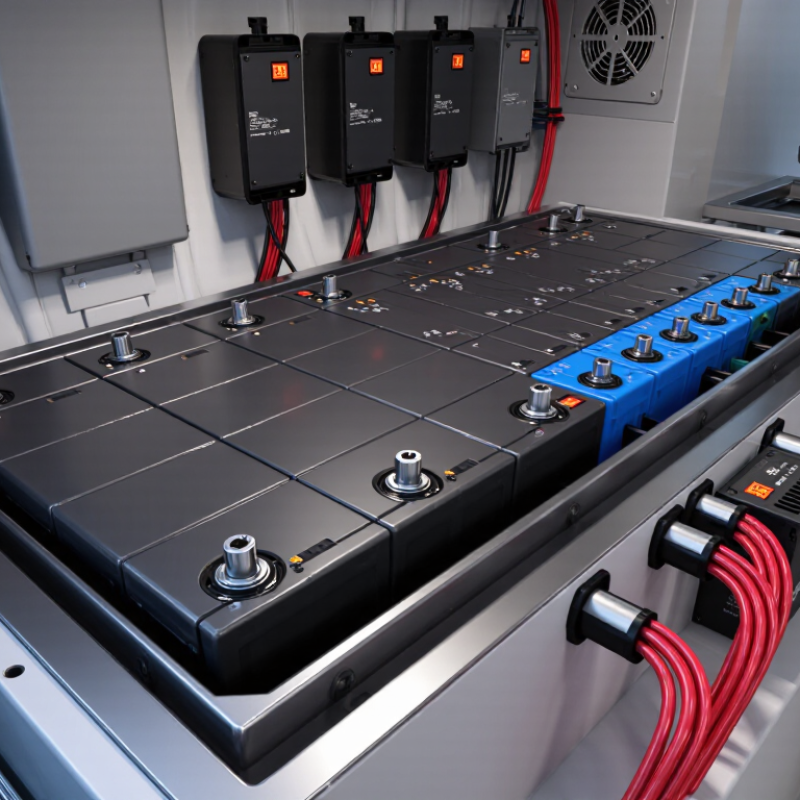
2026 Best Marine Lithium Battery for Boats Which to Buy?

Marine Lithium Battery Types in 2026: LiFePO₄, NMC, and 12–48 V Systems

2026 Best Marine Lithium Battery for Boats: Which to Buy?

Marine lithium batteries now divide into three practical choices: LiFePO₄, NMC, and different system voltages. The IEA’s Global EV Outlook 2024 reports that LFP cells represented nearly 40% of the global electric-vehicle battery market in 2023. That matters for boats because LFP offers strong thermal stability, long cycle life, and predictable discharge. It is heavier than NMC, though. NMC stores more energy in less space, which suits fast boats or cramped engine compartments. The trade-off is stricter thermal management and greater sensitivity to abuse.

Voltage changes the installation more than many buyers expect. A 12 V bank works for lighting, electronics, and small trolling motors. A 24 V system reduces current and cable losses. A 48 V system suits larger propulsion loads, but it demands careful isolation, fusing, communication, and service planning. DNV’s Maritime Forecast to 2050 emphasizes that battery safety depends on the complete system, not cells alone. A quality battery-management system should monitor temperature, voltage balance, charging limits, and fault events.

BloombergNEF reported an average lithium-ion pack price of 115 dollars per kWh in 2024, but marine batteries cost more than this benchmark. My early assumption was simple: higher voltage always meant better value. It was wrong. Installation space, alternator limits, winter charging, and emergency access often decide the real choice.

Check the manual. Measure twice. A cold morning can expose a weak design quickly.

Sizing Boat Batteries: Convert Ah to Wh and Check 20-Hour Ratings

Choosing the best marine lithium battery in 2026 starts with usable energy, not Ah alone. Convert amp-hours to watt-hours with this formula: Ah × nominal voltage = Wh A 100Ah, 12.8V battery stores about 1,280Wh. If only 80% is practical for daily use, the working energy becomes roughly 1,024Wh. A 400W load could run for about 2.5 hours, before inverter losses, wiring resistance, and temperature effects. Real boats are messier.

The 20-hour rating needs careful attention. A 100Ah battery rated at C20 should deliver approximately 5A for 20 hours. Higher discharge rates may reduce available capacity, especially in lead-acid systems because of the Peukert effect. Lithium batteries usually retain capacity better, but their battery-management system can limit output during cold charging, overloads, or low voltage.

IEC 62620 describes performance testing for industrial lithium cells, while ABYC E-13 addresses lithium-ion battery installation practices for boats. These references improve comparison, but they do not replace onboard testing. The International Energy Agency reported a 14% fall in average lithium-ion pack prices during 2023, reaching 139 dollars per kWh in its Global EV Outlook 2024. Lower prices do not guarantee better marine performance. My early sizing mistake was trusting the label and ignoring the refrigerator’s startup surge. Measure actual loads, then add a cautious reserve.

Compare LiFePO₄ Specs: 2,000–5,000 Cycles and Usable Depth of Discharge

For a 2026 boat, LiFePO₄ cycle life deserves closer attention than peak capacity. Industry testing commonly lists 2,000 to 5,000 cycles, but the figure depends on temperature, charging rate, and depth of discharge. The U.S. Department of Energy’s Energy Storage Grand Challenge Roadmap identifies cycle life, usable energy, and safety as key storage measures. A laboratory result is not always a marina result.

Usable depth of discharge changes the calculation. A 100Ah battery used to 90% DoD can deliver about 90Ah before recharge. At 50% DoD, it delivers about 50Ah, but may experience less stress. Many LiFePO₄ systems tolerate 80–90% DoD when managed correctly. However, repeated full discharges, cold charging, and poor ventilation can reduce real service life. Cold water matters.

I would not treat 5,000 cycles as a promise. It is a test condition, not a guarantee for every fishing trip. DNV’s Maritime Forecast to 2050 emphasizes lifecycle performance, safety management, and reliable onboard energy systems. For selection, check the tested cycle conditions, warranty assumptions, continuous discharge rating, battery-management protections, and recommended charging temperature. A battery with 3,000 documented cycles at 90% DoD may be more useful than one claiming 5,000 cycles under gentle laboratory conditions. Read the test details.

Marine Safety Checks: BMS, IP Ratings, and 0°C Charge Cutoffs

Choosing the best marine lithium battery for a boat means checking more than its stated capacity. Start with the battery management system, or BMS. It should guard against overcurrent, overheating, and excessive discharge, while matching the demands of your motor and onboard loads. Ask for clear protection specifications; vague claims are hard to verify. A BMS is not a substitute for correctly sized wiring, sound connections, and careful installation.

Check the enclosure’s IP rating for the kind of exposure it may face. Spray, damp lockers, and accidental splashes are not the same as immersion. Salt can collect around terminals, even inside a seemingly dry compartment. Look closely at the sealing, terminal covers, and installation guidance. Small details matter.

Charging temperature deserves equal attention. Many lithium batteries should not be charged below 0°C unless their documentation explicitly permits it. A cold morning can leave a battery’s surface feeling merely chilly, while its internal cells remain too cold to charge safely. Choose a system with a documented low-temperature charge cutoff, and confirm how it behaves with your charger. Test the setup before a trip. I would not assume every cutoff works exactly as expected; check the manual and verify the battery’s status display in real conditions.

Match Batteries to Starting, Trolling, House Loads, and Alternator Charging

2026 Best Marine Lithium Battery for Boats Which to Buy?

Match the battery to the job, not just the boat’s advertised horsepower. Starting batteries must deliver the engine’s required cranking current; verify the engine maker’s minimum and the battery’s cold-cranking rating. Trolling motors need sustained output, so estimate amp-hours from current draw multiplied by fishing hours. For example, a 30-amp motor running four hours uses about 120 amp-hours before reserve. House loads are different: list lights, electronics, pumps, and refrigeration, then total their daily watt-hours. The U.S. Department of Energy’s Energy Storage Grand Challenge report describes lithium-ion round-trip efficiency in the roughly 85–95% range for stationary storage; real marine results vary with temperature, wiring, and battery limits. Leave a margin. Wind changes plans.

Alternator charging deserves careful matching. A lithium bank can accept substantial current, potentially keeping an alternator near high output for extended periods. Check alternator temperature and rated duty cycle, then use a lithium-compatible regulator or DC-to-DC charger where the system design requires it. The American Boat and Yacht Council’s E-13 guidance addresses lithium-ion battery installation and protection aboard boats; follow its applicable requirements and the battery maker’s charging limits. A battery management system helps protect cells, but it cannot fix undersized cables or poor connections. Measure actual loads at the dock and underway. A tidy load spreadsheet can still miss a bilge pump cycling overnight. That detail matters.

2026 Best Marine Lithium Battery for Boats: Which to Buy? Match Batteries to Starting, Trolling, House Loads, and Alternator Charging

Boat use Suitable battery type What to match Practical sizing guidance Charging and installation notes
Engine starting Marine starting battery; LiFePO₄ only when explicitly rated for engine starting Required cranking amps, engine-maker specifications, battery voltage, and BMS peak-current rating Choose a battery that meets or exceeds the engine's specified cranking requirement. Do not select by amp-hour capacity alone. Confirm that the battery and BMS support the engine's starting surge and charging system. Keep a separate starting battery where the boat's system or engine maker requires one.
Trolling motor Deep-cycle LiFePO₄, if approved for the motor and installation Motor voltage (commonly 12, 24, or 36 V), continuous current, peak current, and required series configuration Estimate energy from average current × hours of use. For example, 20 A for 4 hours is 80 Ah before reserve and system losses; actual draw varies with speed, conditions, and propeller load. Use batteries approved for the required series arrangement. Verify the motor's permitted voltage and charger compatibility; do not assume every battery can be connected in series.
House loads
Lights, electronics, refrigeration
Deep-cycle LiFePO₄ house battery or battery bank Daily energy use in watt-hours, inverter demand, continuous discharge rating, and desired reserve Add the loads' watt-hours for the intended period, then allow for conversion losses and reserve. For capacity estimates, use the battery's stated usable energy and operating limits. Check BMS limits against inverter surge and sustained loads. Use correctly sized, fused cabling and follow the battery maker's guidance for parallel connections.
Mixed starting and house loads Separate starting and house batteries, with chemistry selected for each role Starting-battery cranking rating, house-bank energy, and the boat's battery-combining or isolation design Size the starting battery to the engine specification and the house bank to measured or estimated energy use. Avoid using house-load capacity as a substitute for cranking capability. Use an appropriately designed charging and isolation system. Confirm compatibility among batteries, chargers, alternator, and any battery switch or combiner.
Alternator charging LiFePO₄ bank with a compatible charging path, often through a DC-to-DC charger Alternator output and duty rating, battery charge-current limit, cable rating, and charging profile Set the charging current within the limits of the battery, BMS, alternator, and wiring. The correct value depends on the equipment and installation. A lithium bank can accept substantial current, which may overheat an alternator not designed for sustained high output. A suitable DC-to-DC charger can limit current and provide a compatible charging profile. Follow equipment makers' instructions.

Selection note: LiFePO₄ batteries are typically rated at 12.8 V nominal for a 12 V-class system. Verify the battery's specified charge voltage, low-temperature charging limits, BMS ratings, marine suitability, and compatibility with every connected charger and device. Follow the boat and equipment manufacturers' instructions.

FAQS

How do I convert a boat battery’s amp-hours into watt-hours?

Multiply amp-hours by nominal voltage. A 100Ah, 12.8V battery stores about 1,280Wh. Usable energy may be lower.

How much energy is practically available from a 100Ah battery?

If you use 80%, about 1,024Wh remains for daily loads. Inverter losses reduce it further. Real boats are messier.

How long can a 400W load run?

A 1,024Wh supply could power 400W for roughly 2.5 hours. Wiring resistance, temperature, and startup surges shorten that time.

What does a 20-hour battery rating mean?

A 100Ah C20 rating should provide about 5A for 20 hours. Higher loads may deliver less capacity, especially with lead-acid batteries.

Do lithium batteries maintain their capacity at higher discharge rates?

Lithium batteries usually retain capacity better than lead-acid batteries. However, the BMS may restrict output during overloads or low voltage.

What should a boat battery management system protect against?

A suitable BMS should protect against overcurrent, overheating, and excessive discharge. It must match the motor and onboard loads.

What should I check about water resistance and installation?

Check the enclosure’s IP rating for spray, damp lockers, and splashes. Inspect seals and terminal covers. Salt can hide around terminals.

Can lithium batteries charge below 0°C?

Many should not charge below 0°C unless documentation allows it. Choose a battery with a documented cold-charge cutoff. Test it before traveling.

Why should I measure actual boat loads instead of trusting labels?

Labels rarely show every operating condition. A refrigerator may draw a sharp startup surge. Measure real loads and add a cautious reserve.

Do published standards replace onboard testing?

No. Testing references improve comparisons, but installation quality still matters. Correct wiring and secure connections remain essential. I would verify everything.

Conclusion

Choosing a Marine Lithium Battery For Boats starts with understanding battery chemistry and system voltage. LiFePO₄ batteries are often valued for stable performance and long service life, while NMC batteries offer a different balance of energy capacity and weight. Match a 12–48 V system to the boat’s electrical design, then estimate demand by converting amp-hours to watt-hours and checking whether capacity figures use a 20-hour rating. This makes it easier to compare options and avoid sizing a battery too small for real onboard use.

Compare usable capacity, depth of discharge, and cycle-life claims, which may range from about 2,000 to 5,000 cycles depending on conditions and specifications. Before buying, check that the battery management system provides suitable protection, the enclosure’s IP rating fits its installation environment, and charging is prevented below 0°C when required. Finally, size and configure the battery for its role—engine starting, trolling motor, house loads, or a combination—and confirm that the alternator and charging setup are compatible with the battery’s requirements.


Isabella

Isabella

Isabella is a dedicated marketing professional with a sharp focus on driving brand growth and engagement through strategic content creation. With an extensive background in digital marketing, she combines her passion for storytelling with her keen understanding of industry trends to deliver......