China Top 10 Renewable Energy Battery Storage Manufacturers

Time:2026-09-10 Author:Isabella
0%

China has become a major force in the global Renewable Energy Battery Storage industry. Its manufacturers supply systems for solar farms, wind projects, factories, and remote communities. This guide introduces ten notable Chinese companies shaping that market. The selection considers manufacturing scale, technology depth, safety records, project experience, and international service capability. It is not a permanent ranking. Market conditions change.

A reliable battery storage supplier must offer more than large production volumes. Engineers examine cell chemistry, usable capacity, cycle life, thermal management, and battery management systems. They also assess power conversion equipment, energy management software, fire protection, and maintenance support. A containerized system may look simple outside, yet it contains thousands of cells, sensors, cooling channels, and control decisions. Small design differences can affect lifetime performance. Safety comes first.

Real projects provide valuable evidence. Factory audits, independent test reports, verified installations, and recognized certifications help confirm manufacturer claims. Warranty terms also deserve close attention, especially under high temperatures, frequent cycling, or unstable grids. Some companies appear impressive on paper but offer limited local support. That weakness matters. Developers should compare delivered performance, response times, spare parts, and long-term service agreements. The following overview examines leading Chinese manufacturers through a practical and transparent lens. It highlights their strengths, applications, and possible limitations. No company is perfect. Careful readers should still verify current data before making investment decisions.
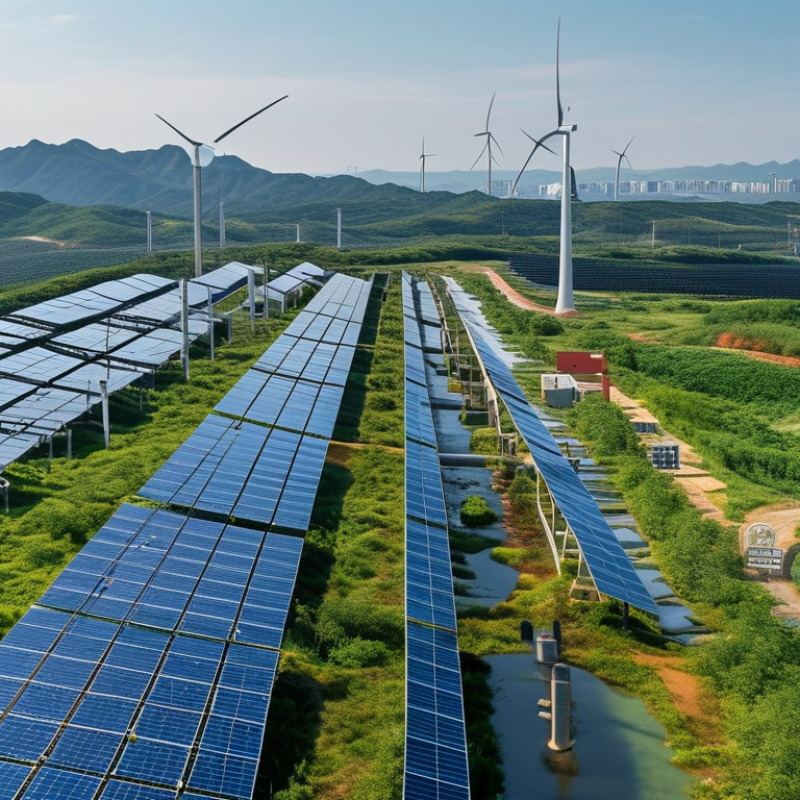
China Top 10 Renewable Energy Battery Storage Manufacturers

Renewable Energy Battery Storage in China: Scope and Industry Overview

China Top 10 Renewable Energy Battery Storage Manufacturers

Renewable energy battery storage in China has moved from pilot projects into large-scale grid infrastructure. The National Energy Administration reported that China’s new-type energy storage capacity exceeded 31 GW by the end of 2023. Most projects used lithium-based systems, while flow batteries and other technologies remained smaller but relevant for longer-duration applications.

The scope is broad. It includes utility-scale storage, renewable power stations, commercial facilities, and distributed systems. China Energy Storage Alliance data indicated that China added more than 20 GW of new energy storage in 2023. These installations commonly use containerized units, battery management systems, thermal controls, and digital monitoring. A typical project may stand beside a solar plant, balancing evening demand when sunlight disappears.

The International Energy Agency reported that China supplied nearly 60% of global renewable capacity additions in 2023. This expansion creates strong demand for storage integration, not only battery production. Manufacturers must address degradation, fire protection, recycling, and performance under high temperatures. Standards are improving, but reporting methods still differ between agencies. That weakens direct comparisons.

The market is powerful. It is not flawless. Some projects still face uncertain revenue models, limited duration, and uneven local grid access. Reliable evaluation should examine round-trip efficiency, warranty terms, safety records, and real operating data, rather than shipment volume alone.

How China’s Battery Storage Market and Technologies Have Evolved

China’s battery storage market has moved from demonstration projects to large, grid-connected installations. A decade ago, many systems served pilots, isolated sites, or peak-shaving trials. Today, manufacturers produce standardized containers, battery racks, thermal controls, and digital energy-management platforms. This shift reflects falling cell costs, stronger supply chains, and renewable power targets. It also changes what buyers expect. They now examine safety records, warranty terms, project integration, and long-term service capacity.

Technology has evolved beyond simple lithium-ion deployment. High-energy cells improve footprint, while liquid cooling manages heat across dense containers. Advanced battery-management systems track voltage, temperature, and state of charge at cell level. Fire detection and suppression have also become more layered. Yet software alarms cannot replace sound spacing, commissioning, and maintenance. Field experience shows small installation errors can weaken an otherwise impressive system. That lesson deserves more attention.

Leading Chinese manufacturers increasingly compete through reliability, integration, and global compliance, not only production volume. They adapt storage designs for frequency regulation, renewable smoothing, industrial backup, and transmission support. Newer projects also combine batteries with forecasting tools and market controls. However, degradation remains difficult to predict under different climates and operating cycles. Cost comparisons can hide replacement risks, auxiliary power use, and recycling responsibilities. Buyers should request independently verified test data and realistic performance assumptions. The market is advancing quickly, but not every efficiency claim survives long-term operation.

China Top 10 Renewable Energy Battery Storage Manufacturers - How China’s Battery Storage Market and Technologies Have Evolved
Rank Anonymous Manufacturer Profile Primary Market Position Dominant Battery Chemistry Typical Product Scale Common Storage Duration Typical Round-Trip Efficiency Design Cycle Life Main Deployment Areas Technology Evolution Marker
1 Profile A Large-scale cell and grid-storage supplier Lithium iron phosphate (LFP) 100 kWh to multi-GWh projects 2–4 hours 88–94% 6,000–12,000 cycles Utility-scale solar, wind, frequency regulation and transmission support Shift from battery cells toward standardized containerized systems and long-duration platforms
2 Profile B Integrated battery-system and renewable-energy equipment supplier LFP 215 kWh to 5 MWh systems 2–4 hours 87–93% 6,000–10,000 cycles Solar-plus-storage plants, industrial parks and microgrids Growing integration of power-conversion systems, energy-management software and thermal controls
3 Profile C High-volume rechargeable battery manufacturer LFP, with selected high-nickel products for specialized applications 280 Ah to 625 Ah-class cells; multi-MWh systems 2–8 hours 88–95% 7,000–12,000 cycles Renewable-energy balancing, industrial storage and capacity shifting Higher-capacity cells reduce the number of packs, racks and auxiliary components per project
4 Profile D Power-battery producer expanding into stationary storage LFP and lithium manganese iron phosphate variants 100 kWh to 10 MWh installations 2–6 hours 87–93% 5,000–10,000 cycles Commercial and industrial storage, charging hubs and renewable microgrids Cell manufacturing know-how is being adapted for safer, longer-life stationary applications
5 Profile E Specialized energy-storage system integrator LFP 1 MWh to 100+ MWh projects 2–4 hours 86–92% 6,000–10,000 cycles Independent power producers, renewable-energy bases and utility substations Greater use of liquid cooling, pack-level fire protection and modular DC blocks
6 Profile F Industrial battery and distributed-energy solution provider LFP and sodium-ion batteries for selected use cases 50 kWh to 5 MWh systems 1–4 hours 85–92% 4,000–8,000 cycles Factories, data centers, commercial buildings and low-temperature regions Sodium-ion technology is being developed for cost, resource-diversification and low-temperature advantages
7 Profile G Renewable-energy developer with in-house storage integration LFP 1 MWh to GWh-scale renewable projects 2–6 hours 87–93% 6,000–10,000 cycles Wind and solar bases, renewable curtailment reduction and ancillary services Storage is increasingly planned as part of renewable projects rather than added as a separate asset
8 Profile H Power-electronics and storage-system manufacturer LFP 100 kW to 5 MWh systems 1–4 hours 88–94% 5,000–10,000 cycles Commercial storage, microgrids, backup power and grid-connected solar Improved inverter efficiency, grid-forming capability and software-based dispatch are becoming central differentiators
9 Profile I Long-duration and stationary-storage technology supplier Vanadium flow battery and hybrid storage technologies 1 MW to 100+ MW projects 4–12 hours 65–85% 10,000–20,000+ equivalent cycles Renewable-energy shifting, capacity support and high-utilization grid applications Flow batteries address applications where long service life and frequent cycling are more important than compact size
10 Profile J Residential, commercial and modular-storage supplier LFP 5 kWh residential units to 1 MWh commercial systems 1–4 hours 88–94% 6,000–10,000 cycles Rooftop solar, residential backup, small businesses and community microgrids Distributed storage is moving toward modular installation, remote monitoring and virtual-power-plant aggregation
The figures are representative public-market ranges for Chinese renewable-energy storage technologies and product categories. Actual performance varies by cell design, operating temperature, system configuration, depth of discharge, project duration and warranty conditions.

Selection Criteria for Ranking the Top 10 Manufacturers

Ranking China’s top renewable energy battery storage manufacturers requires more than counting factory capacity. Shipment evidence should come from audited disclosures, independent market research, and verified project records. The International Energy Agency reported that global battery storage additions reached about 42 GW in 2023, nearly doubling from the previous year. This rapid expansion makes transparent data essential.

The ranking should measure annual storage shipments, production capacity, and delivery consistency. Product performance also matters. We would examine round-trip efficiency, cycle-life guarantees, thermal management, and degradation rates under realistic operating conditions. Safety records should include relevant international certifications, documented test results, and clear incident reporting. A laboratory claim is not enough.

Project experience deserves equal weight. Manufacturers with operating systems across different climates show stronger engineering maturity. We would review commissioning records, warranty terms, spare-parts access, and response times after installation. Financial stability and supply-chain resilience should receive measurable scores, not vague praise. BloombergNEF’s 2024 battery survey highlights falling cell prices, but lower prices can hide weaker durability. That deserves scrutiny. The criteria are still imperfect, because public shipment data may combine cells, systems, and software. Independent verification remains necessary. According to the International Renewable Energy Agency, battery storage costs have fallen sharply since 2010, increasing market accessibility while raising pressure on quality control. Therefore, the final ten should reflect verified performance, lifecycle value, and responsible manufacturing rather than factory size alone.

China’s Top 10 Renewable Energy Battery Storage Manufacturers

China’s Top 10 Renewable Energy Battery Storage Manufacturers reflect a rapidly maturing industrial sector. These companies typically develop lithium-based battery systems for solar farms, wind projects, commercial buildings, and microgrids. Their product ranges may include battery cells, containerized storage units, energy management software, and thermal control equipment.

A reliable manufacturer should provide clear test records, traceable materials, and documented safety procedures. Factory experience matters. Engineers must manage heat, charging cycles, fire isolation, and grid compatibility under real operating conditions. Certification to recognized international standards can support evaluation, but certificates alone are not enough. Buyers should also examine warranty terms, service response times, recycling plans, and performance data from comparable climates. Some published figures look impressive. Actual results may vary.

Tips: Request independent test reports before signing a contract. Check usable capacity, not only advertised capacity. Ask how the system performs after several years of daily cycling. Review installation requirements, ventilation, monitoring access, and emergency procedures. A site visit can reveal details that brochures miss. Local support is valuable when a cabinet alarm appears during a hot afternoon. Price should never be the only filter. A cheaper system may create higher maintenance costs later. Manufacturers also need to explain software updates and data protection clearly. This industry still has uneven reporting, so careful comparison remains necessary.

Product Strengths, Applications, and Global Market Presence

China’s top ten renewable energy battery storage manufacturers compete through safer cells, smarter controls, and adaptable system designs. Their product ranges often cover lithium iron phosphate cabinets, containerized systems, and residential wall-mounted units. Many factories use automated welding, thermal monitoring, and layered fire protection during production. This matters. Independent testing, traceable components, and long-cycle data offer stronger evidence than attractive capacity claims.

For commercial buildings, modular batteries can reduce peak demand and store rooftop solar after midday. At remote solar sites, container systems support microgrids, stabilize voltage, and reduce diesel dependence.

Utility projects require megawatt-scale deployment, remote diagnostics, and clear maintenance procedures. Cold regions expose weaknesses. Low temperatures can slow charging, while weak grid data may produce inaccurate savings forecasts.

Manufacturers with liquid cooling, predictive controls, and flexible communication protocols usually fit wider project conditions. Their global market presence is expanding across Europe, Southeast Asia, the Middle East, Africa, and Latin America. Export strength depends on local certification, installer training, spare-parts access, and responsive technical service.

Some suppliers provide engineering support from early load analysis through commissioning and performance checks. That practical support helps. Yet market claims deserve careful review, because advertised cycle life may depend on temperature, depth of discharge, and operating speed.

A reliable buyer should compare field records, warranty conditions, degradation curves, and grid compatibility before selecting equipment. The industry still has gaps. Recycling routes and second-life planning are not equally mature in every export market.

FAQS

: How should renewable energy battery storage manufacturers be ranked?

: Rankings should examine shipments, production capacity, and delivery consistency. Independent records matter. Factory size alone is insufficient. Public data may combine cells, systems, and software, creating comparison problems.

Which technical features deserve close attention?

Review round-trip efficiency, cycle-life guarantees, degradation rates, and thermal management. Check performance under realistic temperatures and operating speeds. Laboratory claims are not enough.

Why are safety records important?

Safety records should include certifications, test results, and clear incident reporting. Layered fire protection and thermal monitoring provide useful evidence. No system is risk-free.

Where can battery storage systems be used?

Commercial buildings can store midday solar energy and reduce peak demand. Remote solar sites can support microgrids and reduce diesel use. Large utility projects need remote diagnostics and clear maintenance procedures.

How do cold climates affect battery storage?

Low temperatures can slow charging and reduce practical performance. Buyers should examine cold-weather test results and heating strategies. Climate assumptions are sometimes too optimistic.

What should buyers check before selecting equipment?

Compare field records, warranty conditions, degradation curves, and grid compatibility. Also review spare-parts access and technical response times. Cheap systems may cost more later.

Why does global market experience matter?

Projects across different climates can show stronger engineering maturity. Export capability also depends on local certification and installer training. Market presence alone proves little.

Are battery storage rankings completely reliable?

No ranking is perfect. Shipment data may be incomplete or inconsistently defined. Independent verification remains necessary. Recycling and second-life planning also vary between markets.

Conclusion

This article presents an overview of China’s Renewable Energy Battery Storage industry, examining its role in supporting solar, wind, hydropower, and modern electricity networks. It explains how the market has evolved from early demonstration projects to large-scale, integrated storage solutions supported by advances in lithium-based batteries, safety systems, power management, and digital monitoring. The discussion also highlights the growing importance of storage for grid balancing, renewable energy integration, peak-load management, and reliable power supply.

To identify the top ten manufacturers, the article applies practical criteria including technological capability, product quality, manufacturing scale, safety performance, innovation, project experience, service networks, and international reach. It then compares their general product strengths, application areas, and presence in global markets without focusing on specific brands. Overall, the article offers a clear framework for understanding China’s competitive position, the diversity of its battery storage solutions, and the opportunities and challenges shaping the future development of Renewable Energy Battery Storage.


Isabella

Isabella

Isabella is a dedicated marketing professional with a sharp focus on driving brand growth and engagement through strategic content creation. With an extensive background in digital marketing, she combines her passion for storytelling with her keen understanding of industry trends to deliver......