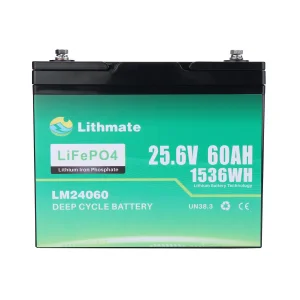
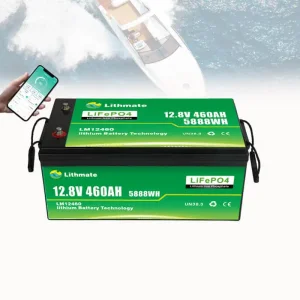
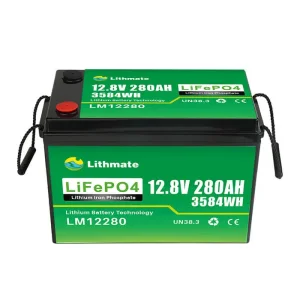
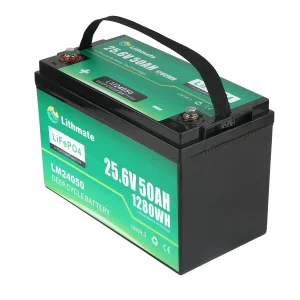
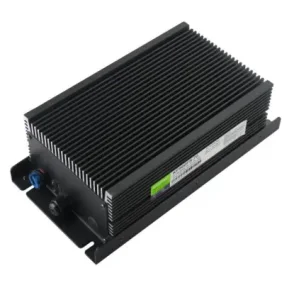
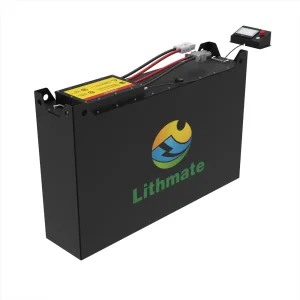
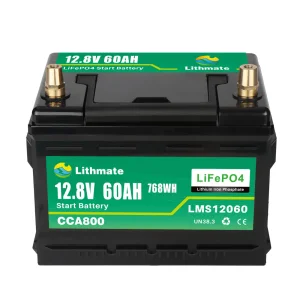
As the world pivots from fossil fuels toward sustainable energy, the lithium-ion ecosystem has become the backbone of modern industry. However, the true potential of any lithium battery is unlocked not just by its cells, but by the sophistication of its Lithium Battery Charger. In 2024, the global market for customized charging solutions is experiencing a paradigm shift. We are no longer looking at simple "power bricks," but at intelligent energy management nodes that communicate with the Battery Management System (BMS) to optimize cycle life, thermal safety, and charging velocity.
From the high-salt environments of offshore marine applications to the high-vibration requirements of industrial forklifts, a "one-size-fits-all" approach is obsolete. As a leading custom lithium battery charger manufacturer, Lithmate is at the forefront of this evolution, providing "Information Gain" through technical transparency and engineering excellence.
The industrial sector is rapidly migrating to LiFePO4 technology. Chargers must now handle wide-range input voltages (85V-265V) and offer IP67-rated protection for harsh environments.
The rise of GaN (Gallium Nitride) technology is allowing for smaller, more efficient chargers with higher power density, reducing heat waste by up to 40%.
Modern chargers are becoming IoT devices, allowing fleet managers to track State of Health (SOH) and State of Charge (SOC) via cloud-based dashboards.
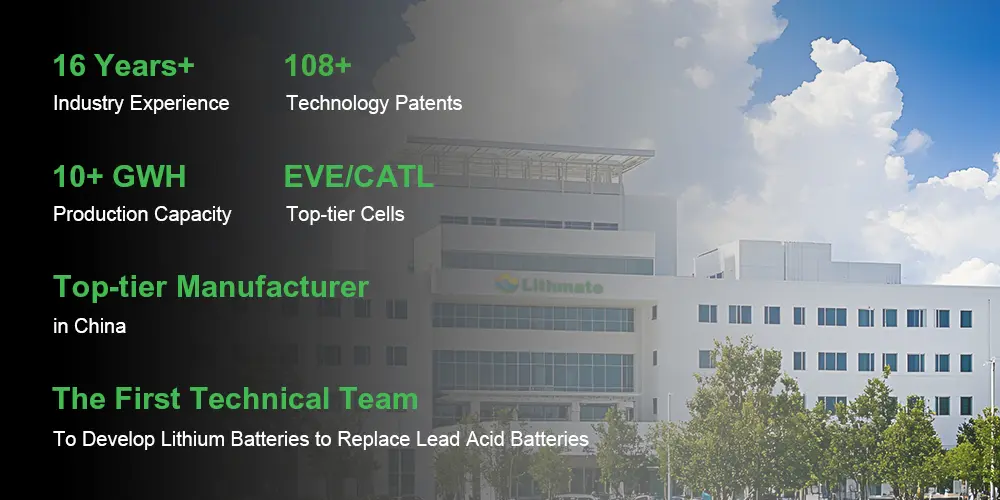
As a professional lithium battery manufacturer, our factory operates in full compliance with ISO 9001 standards, and all products meet multiple international safety certifications, including CE, UL, UN38.3, RoHS, and IEC. At Lithmate, we are committed to continuously advancing and improving lithium-ion battery pack technology.
Our factory is equipped with fully automated and semi-automated production lines, along with advanced battery testing equipment and R&D laboratories. This allows us to support the entire manufacturing process—from research and design to module assembly and final testing—with high efficiency and reliability.
Unlike lead-acid chargers, lithium chargers require a precise CC/CV (Constant Current/Constant Voltage) profile. Our chargers incorporate an additional "Pre-charge" phase for deeply discharged cells and a "Termination" phase that ensures the BMS balances all cells effectively without overcharging.
To maximize safety, our custom chargers feature communication protocols that talk directly to the battery's BMS. This allows the battery to dictate the charging current based on real-time cell temperature and voltage, a critical feature for high-capacity systems used in electric boats and forklifts.
Efficiency is the enemy of heat. Our roadmap includes transitioning all high-power chargers to fanless, convection-cooled designs with high thermal conductivity potting, ensuring longevity even in dusty or humid industrial environments.


Partnering with world-class cell providers like EVE and CATL, we ensure that every charger we manufacture is perfectly matched to the chemistry and discharge characteristics of the cells it supports.





No. Lead-acid chargers often have a "desulfation" mode or different voltage cut-offs that can damage lithium cells or trigger the BMS to shut down. A dedicated LiFePO4 charger with a CC/CV profile is essential for safety and longevity.
CAN-bus allows the charger to receive real-time data from the battery. If a single cell becomes too hot or the voltage is unbalanced, the charger can instantly reduce current or stop, preventing thermal runaway.
For marine and outdoor industrial use, we recommend at least an IP65 rating. Our high-end waterproof chargers are IP67 rated, meaning they are fully protected against dust and can withstand temporary immersion in water.
Lithium batteries support opportunity charging—charging during short breaks without memory effects. Our chargers are designed for high-current delivery to maximize energy intake during these short windows, increasing forklift uptime.
Yes. Our custom chargers are designed with Wide Input Voltage technology (typically 90V-264V AC), making them compatible with power grids in North America, Europe, and Asia without needing external transformers.
 Lithmate