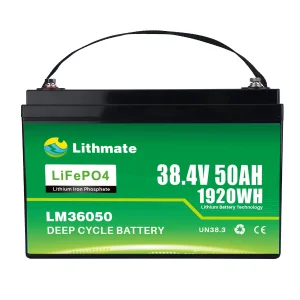
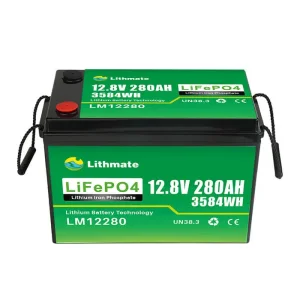
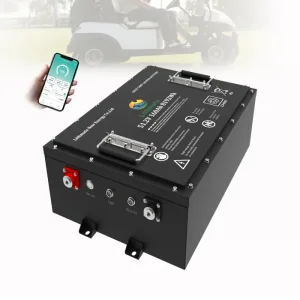
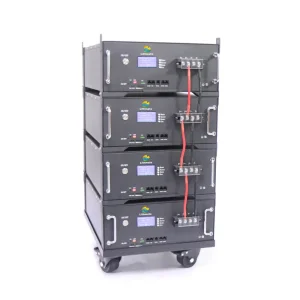
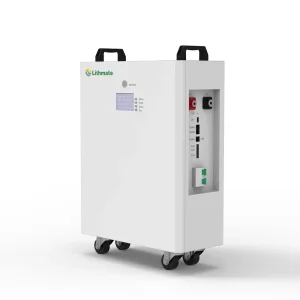
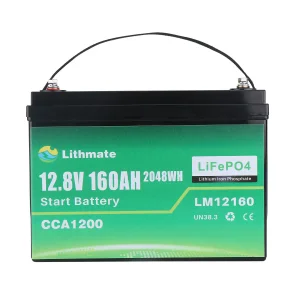
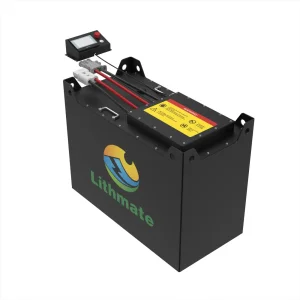
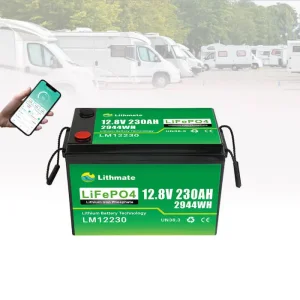
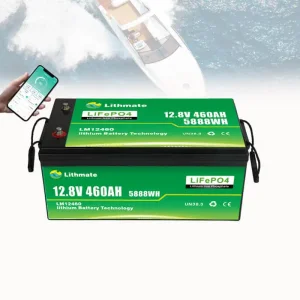
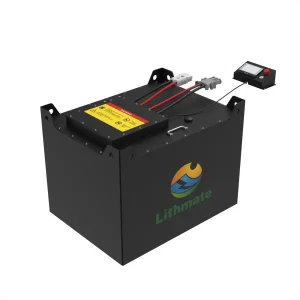
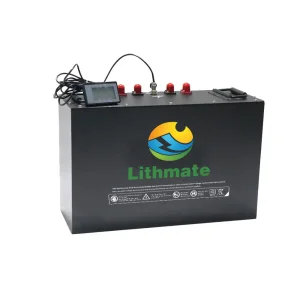
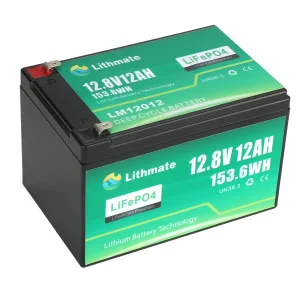
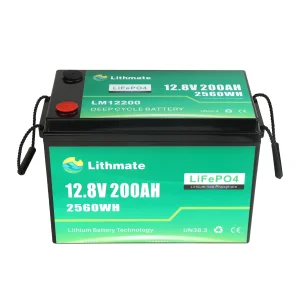
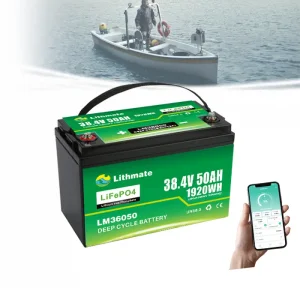
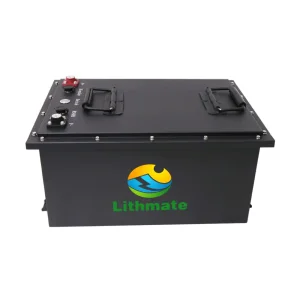
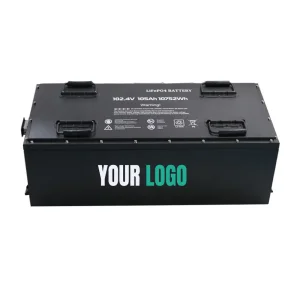
Explore our flagship configurations optimized for heavy duty cycles, intelligent power telemetry, and high energy density deployment.
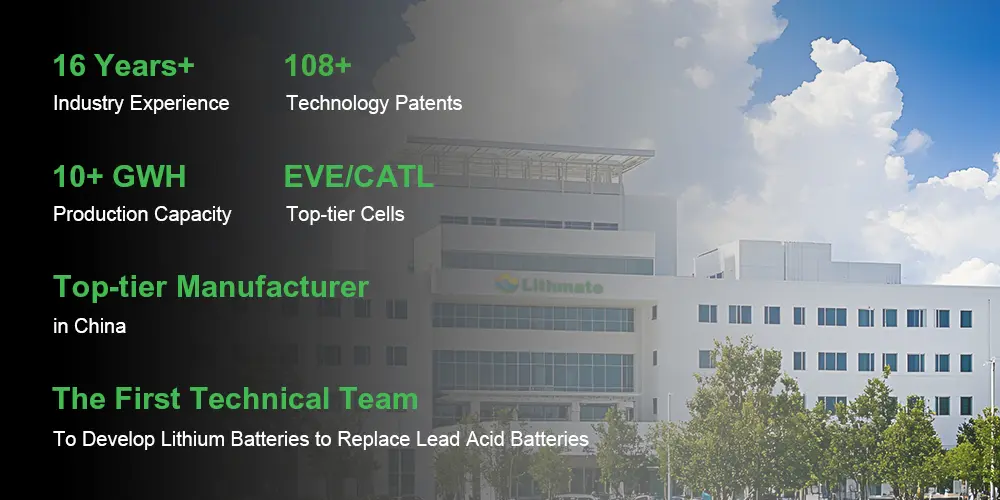

As a leading name in the global lithium energy sector, Lithmate operates in full compliance with ISO 9001 quality management structures. All our storage and power battery products are certified against international testing frameworks including CE, UL, UN38.3, RoHS, and IEC, ensuring that industrial clients receive battery solutions that prioritize safety, reliability, and long-cycle longevity.
Our infrastructure includes fully automated and semi-automated assembly lines capable of supporting the full product lifecycle: from initial architectural prototyping and BMS optimization to battery module welding and rigorous climatic safety testing.

Fully compliant with international marine and road transport mandates.

Continuous cell chemistry optimization and intelligent battery algorithms.

Integrated global support system serving clients in over 30 countries.

Fully customizable structural dimensions, interfaces, and smart telemetry.
An in-depth look at chemical compositions, safety parameters, supply chain logistics, and thermal dynamics in next-generation recreational vehicle energy storage.
In modern overland platforms, energy density, cycle life, and safety are non-negotiable. Traditional Lead-Acid (including AGM and Gel variations) suffer heavily under high depths of discharge (DoD), experiencing dramatic voltage drops and capacity fading when discharged past 50%. Furthermore, their weight-to-energy ratio (typically 30-40 Wh/kg) severely limits the capacity of mobile cabins without exceeding chassis payload limits.
Lithmate's custom battery packs utilize Lithium Iron Phosphate (LiFePO4) chemistry. With an energy density exceeding 140 Wh/kg, these cells reduce weight by up to 60% compared to AGM equivalents. Unlike Nickel Cobalt Manganese (NCM) configurations, LiFePO4 cells feature structural stability that avoids oxygen release under thermal stress, mitigating risks of thermal runaway. This chemical design supports over 4,000 charge cycles at 80% DoD before capacity degrades to 80% of its initial rating, offering a service life exceeding 10 years.
At the center of each high-performance pack is a custom-engineered Battery Management System (BMS). The BMS acts as the safety gatekeeper and communication bridge for the vehicle's electrical system. Key functional modules include:
Reliable battery performance depends on the quality of its individual cells. Lithmate builds partnerships with Tier-1 cell manufacturers, including EVE and CATL. By using Grade-A prismatic cells, our packs maintain lower internal resistance (typically <0.5mΩ) and excellent capacity retention under high C-rate discharge conditions. This cellular quality control helps prevent early voltage drop and irregular heating, ensuring reliable power supply even during high-load operations like running cabin air conditioning or induction cooktops.
Combining design flexibility, high manufacturing standards, and direct factory supply chains to deliver reliable energy storage solutions.
Our development and manufacturing workflows are fully certified under ISO 9001 frameworks. Our products meet international shipping and safety standards including CE, UN38.3, MSDS, UL, IEC, and RoHS. By working closely with testing institutes, we ensure our batteries comply with local safety standards in North America and European jurisdictions.
Our Huizhou Energy Storage and Power Battery Engineering Technology Research Center focuses on thermal simulations, high-vibration structural designs, and software development for advanced BMS solutions. We collaborate with academic institutions to turn new battery research into practical solutions for commercial fleets and marine projects.

Backed by our customer service team and engineering diagnostics to protect your investment.

Direct communication with our technical support team for system integration and troubleshooting.

Efficient supply chain management and standardized cell stock enable reliable delivery times.





How our custom lithium solutions are integrated across industrial, marine, logistics, and automotive platforms worldwide.
 Automated Guided Vehicles (AGV/AMR)
High-efficiency automated systems require continuous uptime. Our batteries support opportunity charging at high C-rates, allowing vehicles to recharge during short breaks. The BMS integrates with centralized warehouse software to track State of Charge (SoC) and State of Health (SoH) metrics in real time.
 Electric Low-Speed Vehicles (LSV) & Golf Carts
Our high-capacity lithium configurations offer golf cart and utility vehicle fleets extended range and consistent torque, even on steep slopes. They are designed to drop directly into existing compartments, simplifying the transition from lead-acid batteries.
 Marine Propulsion & Onboard Auxiliaries
Saltwater environments demand high-grade protection. Our marine battery packs feature corrosion-resistant connectors, anti-vibration cell anchoring, and IP65 to IP67-rated enclosures. They supply steady power for trolling motors, navigation systems, and domestic loads on commercial and recreational vessels.
 Industrial Forklifts & Cleaning Machines
Designed for multi-shift industrial applications. Our batteries support fast-charging capabilities, eliminating the need for spare battery storage and time-consuming changeovers. A robust casing protects the pack against heavy vibrations and physical impacts.
 Off-Grid RV Dwellings & Solar Systems
Our high-capacity batteries integrate with residential solar systems and camper van power centers. High charge efficiency (up to 98%) allows the system to maximize solar generation, storing power for heavy appliances like refrigerators, heaters, and water pumps.
 High-Output Engine Cranking Solutions
Designed for cold-cranking operations in cars, trucks, marine engines, and motorcycles. Our starter batteries use optimized cells that deliver high discharge currents in low temperatures, providing reliable engine starts down to -40°C.
The manufacturing efficiency of Lithmate's facility in Huizhou, Guangdong, relies on proximity to the lithium supply chain. Guangdong handles a significant share of the world's battery raw materials processing, component manufacturing, and electronic development. This concentration allows us to maintain stock of core components, including copper busbars, casing materials, and advanced semiconductor components for BMS assemblies.
By leveraging automated cell sorting, module welding, and laser-assisted balancing steps, we reduce production variations and maintain structural consistency across every pack. This localized manufacturing network helps lower production costs and shields partners from international component shortages, offering reliable supply lines and shorter lead times.
Our R&D roadmap centers on three main technological updates designed for industrial and RV applications:
Exporting lithium-based storage systems requires strict adherence to international safety rules. All Lithmate batteries undergo testing to comply with UN38.3 standards for air and sea transport, as well as UL1973 certifications for stationary and auxiliary vehicle applications. We operate regional warehouse hubs in key markets to simplify local customs clearance, lower transport costs, and provide direct shipping options to commercial assembly lines.
Addressing core technical questions from design engineers, fleet managers, and system integrators.
Charging a lithium battery at sub-zero temperatures can lead to lithium plating on the anode, causing permanent cell degradation and short-circuit risks. Our BMS features thermal sensors that detect low temperatures. When a charging current is applied at or below 0°C, the BMS routes this energy to internal heating pads rather than the cells. Once the battery's internal temperature reaches a safe 5°C, the BMS switches the current back to charge the cells.
Yes, our standard packs support configurations up to 4 units in series or 4 units in parallel (4S4P). To maintain safety and prevent imbalance, all batteries in the bank must be of the same model, age, and state of charge (SoC). We recommend balancing the individual batteries to the same voltage level before connecting them. For high-voltage configurations, our engineering team can design custom high-voltage packs to avoid cell balancing issues in series.
Prismatic cells offer higher packaging efficiency, greater structural integrity, and lower internal resistance than standard cylindrical cells (like 18650 or 21700 formats). They use robust aluminum casings that resist physical swelling and vibrations common in off-road vehicles. Because a prismatic pack requires fewer internal cell connections and welds, it has fewer potential points of failure, improving system reliability.
Our BMS monitors individual cell voltages. If any cell falls below the cutoff limit (typically 2.5V), the BMS disconnects the load to prevent cell damage. The battery enters a low-power sleep mode to conserve energy. To recover the system, a charging source must be connected to apply voltage to the terminals, prompting the BMS to wake up and allow charging.
Our BMS supports CANbus, RS485, and Modbus communication protocols. We provide pre-configured profiles compatible with marine and RV inverter/charger brands such as Victron Energy, Growatt, and SMA. This allows the system to exchange real-time SoC, voltage, temperature, and alarm metrics, optimizing charging profiles based on the battery's state.
Explore our high-voltage and high-capacity battery options designed for commercial fleets, marine systems, and material handling applications.
 Lithmate